Best laid plans – the challenge of rethinking projects

I dream of a cupboard with patchwork quilts in neatly folded rainbows. There is the scent of lemon myrtle and bay leaves.

I have the beginning of this dream, it’s just that I haven’t made a contribution to the stack. What is there is because of the endeavours of my mum. (Thanks, madre!)

From time to time I have another go. I buy fabrics – gorgeous, colourful textiles. I buy quilting books and look at them on rainy afternoons. Sometimes I cut and start to piece quarters together.

I get caught up in the need for the piecing to be exact. It would help if I could relax my way into the sewing. I expect I would also need to be able to ‘spread and leave’ a sewing project while it was in progress.* It is literally a question of time and space.

Sometimes, when I contemplate another go I think back to the evening (sometime last century, so a while ago …) when I laid backing, batting and a top piece on the floor of the lounge room.

I stretched the sandwiched layers, pinned them into place and tacked them together. I got to the end and released all the pins but the pieces didn’t spring back to a relaxed state.

I had managed to stitch the whole lot into the weave of the carpet.

Putting the stitches in had taken a lot of the evening. I knew they were only to hold the layers in place and that they would be unpicked as soon as the quilting-proper was done. Even so, I had been neat and thorough. It was a work of beauty.

It took hours to unpick it all and weeks to start again.

Piecing it together

Why am I thinking about the delights of a patchwork blanket (preferably in a simple pattern like flying geese or tumbling blocks – I know my limitations, after all)? It isn’t just the present shift in the weather to rain.

I have a cupboard full of fabric for patchwork and quilting projects. I can’t remember the last time I opened it. At the moment, I don’t think I could even negotiate a path to it. There are books and a filing box of research notes in the way.

To be honest, the books have taken over a bit.

This was pointed out to me by one of my favourite young people yesterday who observed that I should not buy more books because (and these points were made quite clearly and purposefully)

  1. I already have more than a thousand books. (True, but I don’t think the number is excessive. Nor is the collection frivolous.)
  2. I haven’t read all the books I already have. (Also true, but I like to think of my library as aspirational. Also, tsundoku is a beautiful word. It is possibly one of my top five favourite words. In any case, I’m planning on reading them.)
  3. I have run out of shelf space and there are books in stacks of twenty on a table. (Not quite true, none of the stacks reaches to twenty. If I were a shade tetchy I might suggest that the young person should count again and revise the merits of their argument. Clearly, that is unnecessary.)

Many of the recent additions have come about as I’ve clarified the texts I want to use in my thesis.

Others have made their way to the stacks – and been graced with my current favourite bookplates – by virtue of simple desire. Or, they relate to past and planned projects.

Or, …

Does there really need to be a reason?
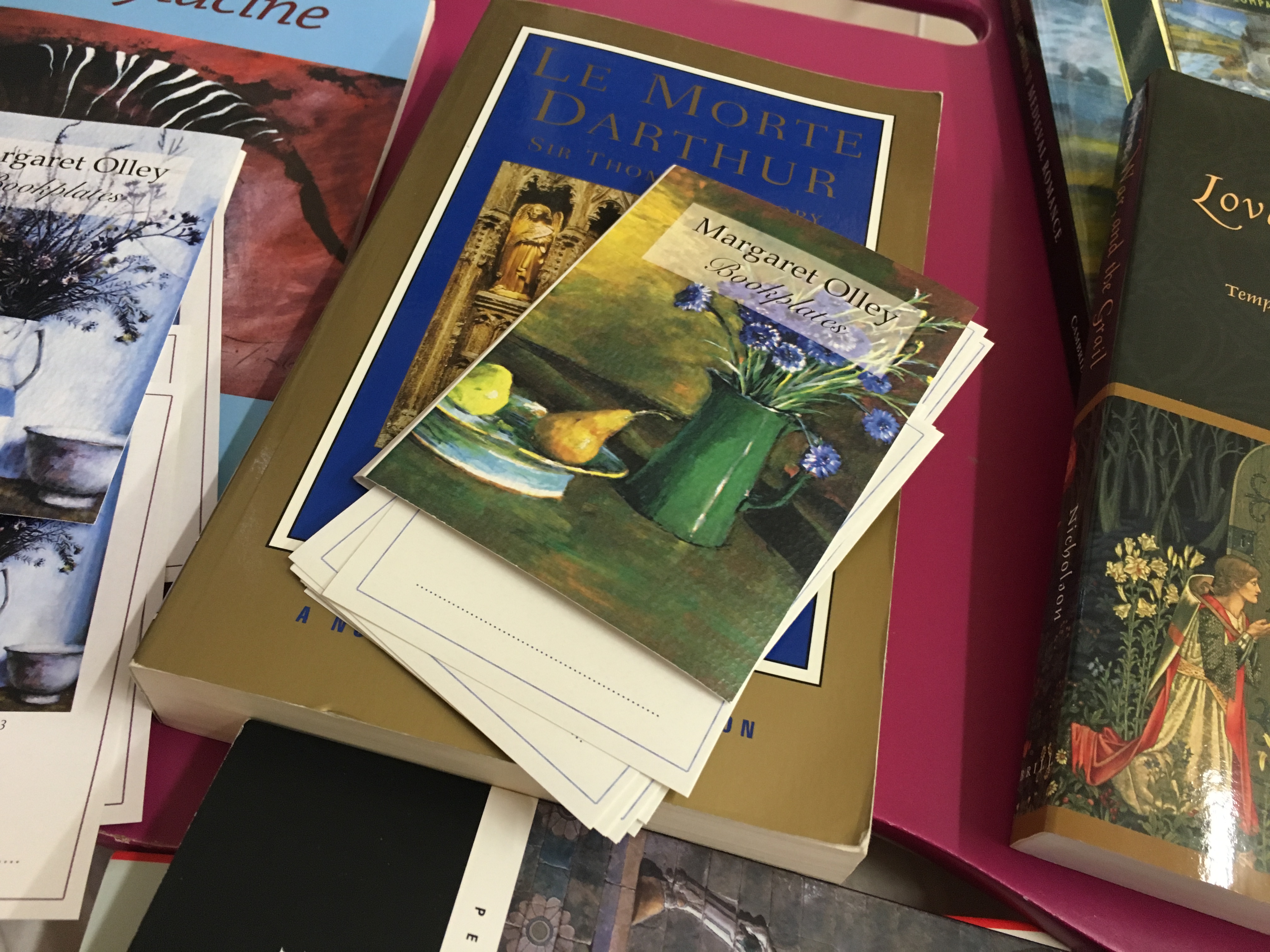
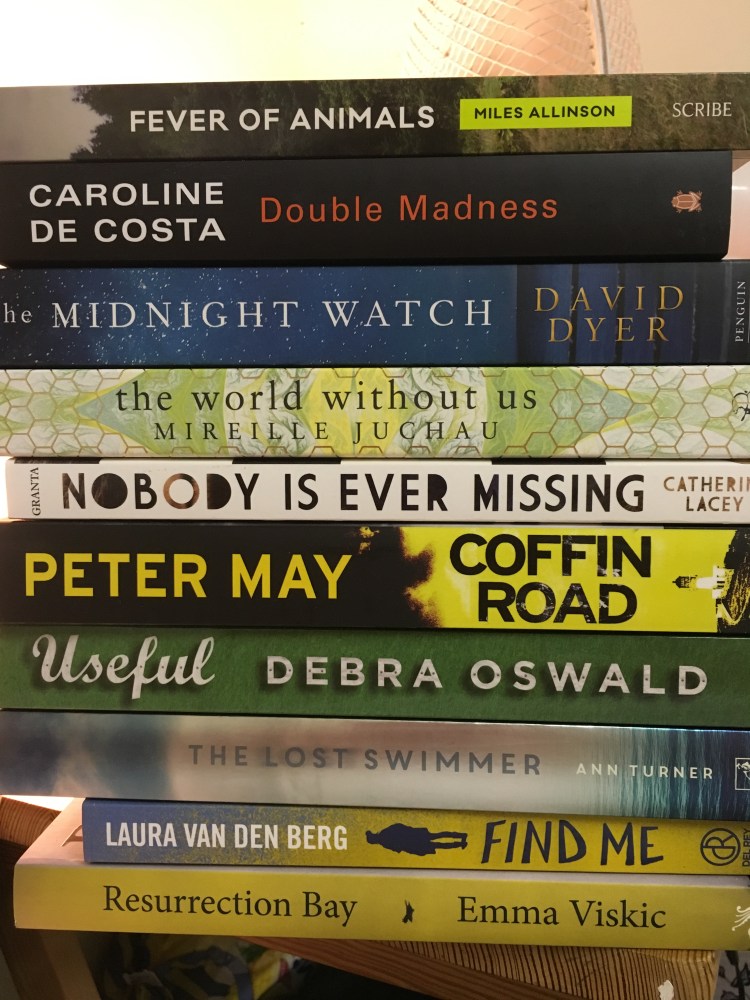
Adding books to my library Some of April’s additions

Working out light and shade

Amid the flourishing crop of books and research articles I’ve been looking at my project plan as I try to rejig my approach to my thesis.

My most recent focus has been hagiography – specifically saints’ lives in Middle English, and more specifically female saints’ lives. This was always part of my plan. I’m pretty clear about the what of my research but as I’ve selected sources I’ve also been working on how the project as a whole fits together.

And I’m reminded of the quilts I’ve never made.

There’s the piecing of the squares to make the blocks and then the laying out of the blocks into the overall pattern. This happens before the (in my case, sometimes disastrous – as described above) sandwiching, strapping and quilting.

Before all of that, though, there’s the selection. The balancing of tones within a square before you move on to the blocks.

When I bought my first quilting book (sometime in the 90s) I dutifully made a shopping list on the basis of the ‘necessary items’ that the book listed. One item was a ‘ruby beholder’ and I would go into craft shops to ask if they had one only to be met with blank stares. A what?

When I eventually found one I misunderstood how to use it. It is a rectangle that features a square cut out. I thought that was so a quilter could determine which bit of fabric to feature in a block; the square was a frame. I was wrong.

As it turns out, a ruby beholder is a device for working out ‘colour values’ in fabric. It tells you which fabric in a selection is light, medium … or dark. (Here’s a video that explains this, if you’re curious.)

I had set up this (I thought) brilliant plan of the structure of the thesis. I knew I shouldn’t become attached but that’s precisely what I did, despite my best intentions.

I’ve realised that my thesis is not unlike a quilt.

I need to work on building individual squares. Ultimately, though, the pieces might have to move around.

A ruby beholder for literary sources would be a bonus.

Stack of books Raw materials


*This is based on familial observations which I like to think are expressed as endearments but could equally be epithets of despair.


Poetry in film – a quick update

I finally caught up with watching O Brother, Where Art Thou and loved it. I was blessed that a friend volunteered to watch it with me. She cooked chicken, I bought salad. (It is generally understood and accepted that if I’m bringing something for the table I’ll be picking it up on the way.) Sharing the viewing wasn’t something I had planned when I thought of this project.

With all the other reading I’ve had on the go lately, I hadn’t had time to review The Odyssey in the detail I would have liked. Instead, I resorted to rustling up some quick searches on my tablet as the DVD played. I figure that since I went through a phase of watching the movie a lot a few years ago (scenes and dialogue memorised, etc.) I wasn’t interfering with the viewing process.

Not too much, anyway.

On balance

I decided I really do like the looseness of the Coen brothers’ approach to the story. I’d also like to look at more interpretations and spin offs, but I know I just don’t have time. Perhaps when I’m next looking for a side-project it could just be about incarnations of epic poetry in popular culture.

The possibility of it feels so deliciously nerdy.

I can see my reading/viewing list already. I think it will begin with Margaret Atwood’s The Penelopiad (Canongate Myth Series, 2005).* The first film is likely to be 2001: A Space Odyssey (Kubrick, 1968) – because I can’t remember when I last watched it. Certainly not in living memory.

Abundance

I’ve also been thinking there might be a couple of poems of my own that I’d like to work on. (To be clear, I have NO plans to attempt epic poetry any time soon!) Not that I need to add anything more to the to-be-written list. That seems to have been exploding in the past little while. On the upside, I’ve managed to move some titles from the to-be-written to the that’ll-do-for-now side of the ledger.

Getting things written is always lovely.  I don’t mean that as a euphemism. I literally mean that I find finishing a piece of writing to be one of life’s pleasures. It is lovely.

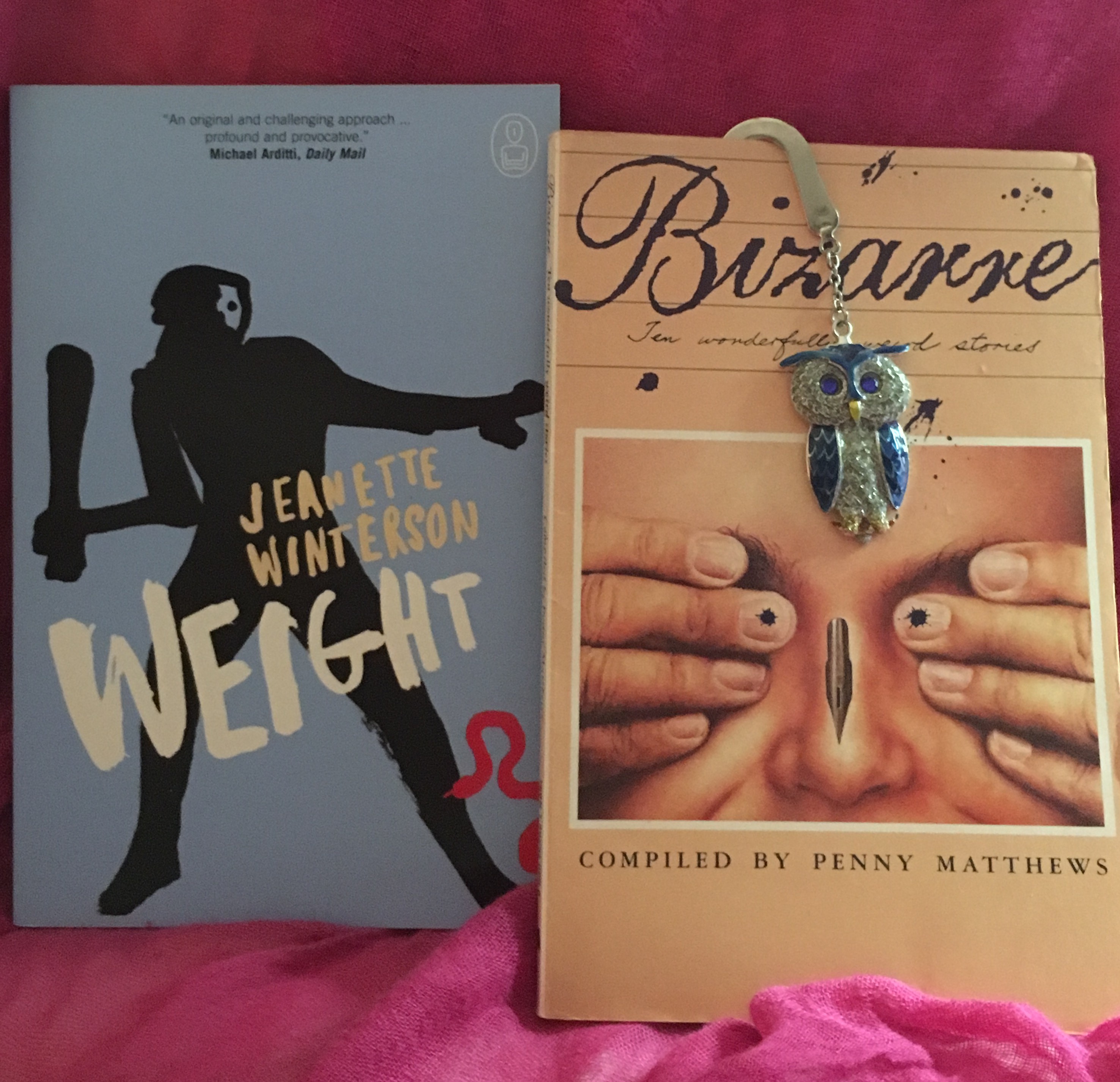
In the meantime, there is a short story that I’ve been meaning to read again – ‘The Owl Boy and the Goddess Athene’ by Gillian Rubinstein. You’ll find it in Bizarre: Ten wonderfully weird stories, compiled by Penny Matthews (Omnibus Books, 1989). I used to love reading it to Year 8s. Such fun!

Reading wakes me up, so now – it’s gone midnight – isn’t my best time to open the book. I think it’ll be a goer for when the alarm goes off in the morning. So long as I get to sleep soon(ish).

Before I go

Next up on the poetry-in-film plan is

  • March Jabberwocky (Terry Gilliam, 1977)
  • April The Raven (I’m not sure which version … Charles Brabin, 1915; Louis Friedlander, 1935; Roger Corman, 1963; James McTeigue, 2012)

I think we can safely say, March is going to look a lot like April by the time I sit down to Jabberwocky and I still need to work out which version of The Raven … I’m a shade torn.

Twists on myth quick reads
A couple of quick reads for the meantime


*Jeanette Winterson’s Weight is a part of the Canongate Myth Series. I love it. I cry every time I read it – and I seem to read it every year or so.


Recharging – working hard while taking a break

I’ve just had a week’s break.

Annual leave is a beautiful thing, an upside to having my day job. That’s something I need to remember when I’m railing against my workday routine of 9-5 (so to speak).

Earlier this year, I was fretting that I wouldn’t be able to string the days together and dedicate a week to relaxing. There is always so much to be done.

What I needed to do was just book the time.

My initial plan was to have at least a few days without technology. No phone, no tablet, no laptop.

Hilarious. There’s a reason my family has called me ‘Techno Jo’ from time to time.* I love my various screens and devices. I’m considering a formal retreat where I’ll need to leave all the technology at the door.

A while ago, I used to do that myself. Regularly. All the technology in a room, on silent. The door shut, phone unplugged. I’d send a clear message to family and friends ahead of time that I would be unable to be contacted while I was on retreat.

The retreats featured meditation and writing. They were blissfully refreshing. I was disciplined and invariably productive, but this wasn’t the week for that sort of discipline. I had some loosely defined goals.

Assessing the break

There were a few things I didn’t manage to do:

  1. Go away for a couple of days. The thought of packing, then of unpacking. To go, then to come back. I couldn’t rise to it.
  2. Keep away from work emails and phone calls. I made it through to around half past three on Monday. Eventually, I stopped checking in. Switching off is a challenge!
  3. Catch up with the housework. I did some but not all the ‘autumn cleaning’ I’d planned. It would have been good to do more, but not essential.

Not managing to meet those three goals wasn’t disastrous. I had a wonderful week. It was busy but the pacing was manageable.

I shouldn’t be surprised that when I’m taking time to do things I love – with people I love – that I will simply feel energised.

Some of the things I did manage to accomplish include:

  1. Enjoy a couple of lazy mornings. I switched the alarm off but I woke up at my normal time but pottered about. I’m always fascinated by how easy it is to wake up while I’m on holiday. There was time for meditations and journal writing.
  2. Catch up with  friends. Relaxing conversations with minimal distractions are a luxury. I was blessed to have time to catch up with some of my favourite people over leisurely cups of tea and chatty lunches.
  3. Make the most of being able to be on campus. I made it to a couple of presentations. There was time for work on my thesis. I spent quality time with The Wife of Bath and Foucault. I sat out on the lawn and made friends with one of the peacocks. (Ok, friends is probably stretching it. He was hoping I had treats. I didn’t, he left.) I hung out.
  4. Take in some of the wonderful events happening in Perth. The PIAF film season is in its last weeks. I made it to Rams (Grímur Hákonarson, 2015) at the Somerville on Monday. It was a hideous day in Perth (it was still about 37 at 6.30 in the evening). The film is set in Iceland and looks cold. There was a summer thunder storm with flashes of lightning behind the screen and minimal rain and made a nice contrast. Later in the week, I made it to Sculptures by the Sea on a hot day and then on a cooler, overcast day.
  5. Do some writing. This was where my week really shone. There was some work for uni. I went to a blogging workshop with Amanda Kendle, which is always a joy! Her travel blog, Not a Ballerina, is full of adventures and great tips. Inspired by the workshop I curated content, I finished a late post. I also kept up with the journalling. I wrote four poems (and tinkered with five or six others).
Somerville after a hot day
A clear sky before the clouds

Learning from the break

I was well overdue for a decent break when this week rolled around. What I needed wasn’t necessarily a week of doing nothing. But a week which featured creativity and friends was magic.

I didn’t get to spend time with the ‘to read’ pile teetering on my nightstand, but I have plans for that in the next few weeks.

Cottesloe on a calm day
Blissfully calm

*They also call me ‘Unco Jo’ because of my decided lack of coordination. There are worse names than these, I guess.


Poetry in film – February – O Brother, Where Art Thou?

Yes. I know. It’s March. What happened to February? I still can’t believe it’s gone.

My plan for February was to watch O Brother, Where Art Thou?  by the Coen brothers. The DVD is ready and waiting on a shelf I pass multiple times a day. It’s at eye level and I look at it each time I pass by. I just haven’t been able to watch it.

Despite that, the film and its distant, loose connections to The Odyssey have been on my mind.

In the meantime, my real purpose in this ‘poetry in film’ project (which sounds so much better than distraction, tangent, avoidance strategy …) was to think about the poems. There should be time for the film over the Easter break but I’m going to jump ahead and riff a bit about the poem now.

A late arrival

I came to The Odyssey late. I dipped into it as necessary when I was an undergrad. I watched friends work with it as part of their studies of Ancient Greek. I wished I could fit Ancient Greek into my own program. I couldn’t. I let it go.

I have fond memories of Sunday mornings in the ’90s watching Tony Robinson’s Odysseus, The Greatest Hero of Them All. I loved that. Robinson’s storytelling on windswept beaches and that great grey coat (and was there a red scarf? a pinkish one?) has stayed with me. Rik Mayall’s Grim Tales was also part of my television viewing at this time. I remember there was cracking storytelling from both Robinson and Mayall.

From time to time there were brief excursions into episodes along the way. Links to a short story here, a conversation about Homer/epic poetry/oral traditions there. It would come up – as you’d expect – in discussions about the hero’s journey and archetypes.

I didn’t read the poem in full until I was in my thirties. I still haven’t learnt any Ancient Greek* so I read it in translation – a Penguin Classics edition by E. V. Rieu, D. C. H. Rieu and Peter Jones and the Robert Fagles translation that I’ve realised is missing from my bookshelf and will need to be replaced. (Yay for shiny new copies!)

I read the Rieu et al version at the height of summer, stretched out on the floor very close to a fan. It was perfect reading for ridiculously hot days that stretched into hideously hot weeks.

I loved the unevenness of the narrative line. When I finished The Odyssey I jumped straight to The Iliad. It was that sort of summer.

poetry in film check in february book pile
Ready and waiting

A recent encounter

In the past few months, The Odyssey has been popping up. It could be I’m noticing it because I knew I would be thinking about it as part of the schedule I set myself. One of those, I just bought a red car, now all I notice is red cars scenarios.

The most striking encounter was when I caught The Epic (Finn O’Branagain and Scott Sandwich) as part of this year’s Perth Fringe Festival. That was an hour of whirlwind storytelling that looked at some of the ‘big’ stories from across the world over history. The show included a captivating demonstration of the ripples of the story that continue to be felt. (I won’t go into detail because I’d hate to spoil it for you if you ever get to see it. You never know…)

I had gone to the show because I thought there was a bit about Macbeth (there wasn’t). The Odyssey turning up was a timely bonus.

The Muse and magic

The Odyssey opens with an invocation to the Muse. As it’s an epic poem, I’m guessing that is Calliope. The invocation rests in ritual and the sacred. It also makes sense for the poem as a spoken performance. It not only calls the muse but captures the audience.

The telling of the story begins with an incantation.

Perfect. So much of storytelling is weaving a spell. I love that drawing in – and being drawn in. There is also the appeal of an external (or it could be internal) driver.

The invocations in Homer’s The Odyssey, its companion The Iliad, Virgil’s The Aeneid and in later poems such as John Milton’s Paradise Lost and, with a slightly different  purpose, Edmund Spenser’s The Faerie Queene offer up the poem as something not only created but inspired.

The lit-nerd in me quite likes the idea of reading just the invocations and doing a formal comparison of what they seek and what they offer.

There are all sorts of arguments against inspiration and for the hard graft of day in-day out work, but there’s a part of me that loves the idea of an otherworldly – if not divine (and these days I’m more atheist than agnostic …) – spark as the impetus of a work.

Why not begin with an invocation to a muse, human, divine or otherwise?

Peacock close up
A muse of sorts

*One day I hope to read it in the Ancient Greek. For now, though, translations have to do. After this thesis is done. Latin has a higher priority. And Middle English, for that matter. I’ll be in my 50s. Excuse me while I process that …

A singing bird – reading leads to writing which leads to reading

Despite the best of intentions, I’ve strayed from the routine I’ve been nurturing. Actually, I did so intentionally. I have been wilful and made a fully intentional detour.

After all, life has to happen like that sometimes.

My life does, at least.

It only becomes an issue when the detour needs to come to an end. That’s where the best of intentions come into play. Detours and diversions can be so (let’s be honest) seductive.

This is a recurrent theme in my reflections. What I’ve realised is that I’ve arrived at a point where I need to take time to do what gives me joy if I’m going to stay focused on the other things. There might be joy in them, the other things, but … sometimes I need to be sure of some respite.

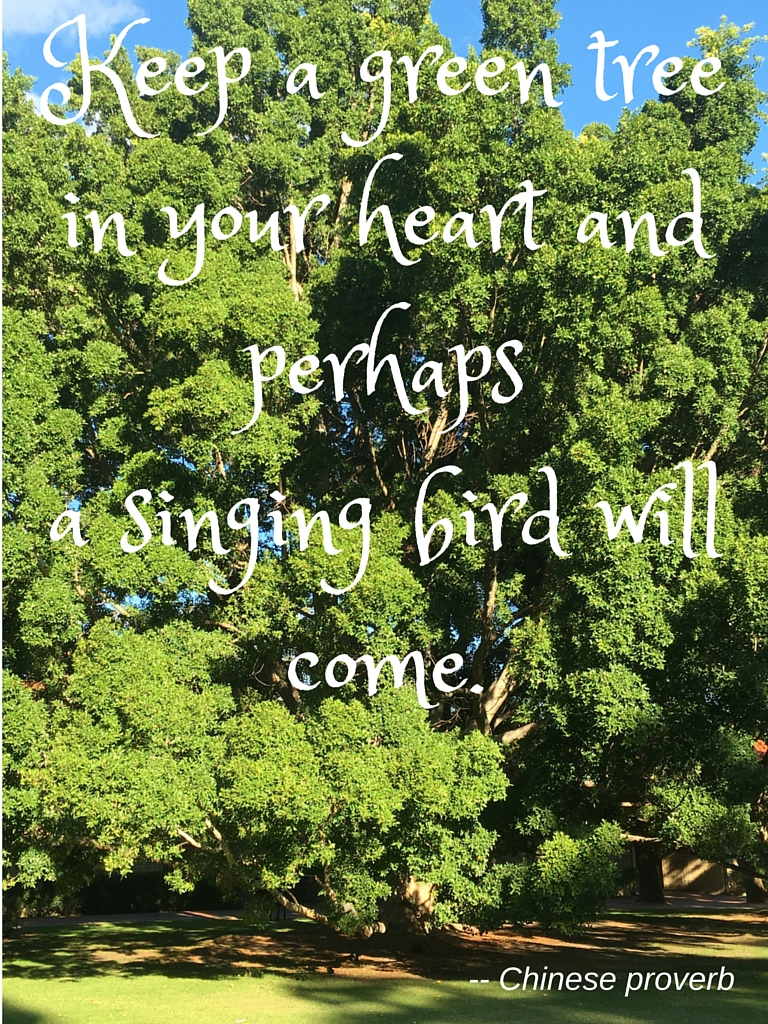
There is a Chinese proverb that I have always loved: Keep a green tree in your heart and perhaps a singing bird will come.

Keep a green tree in your heart and perhaps a singing bird will come
A thought to carry

I always think of the bird as joy and creative energy.

The joy of reading

Most of my life – day job, study, recreational time – revolves around words. As a rule, that works for me. I love what I do. Mostly.

There a moments, though, when my heart sinks. Just a little.

Another discussion about Oxford commas, anyone?

But words and everything that goes along with them are what makes my heart sing. Reading and books, word games and word play have been at the centre of my world. I can’t remember a time when I wasn’t a reader.

I’ve always loved putting words together. In my head if there’s been no paper or, in those early years of school – it was that long ago, a slate.

  • My great-grandmother, Old Nan, was legendary for wanting to read everything. She was voracious. I didn’t know her for very long. She was 97 when she died and I’m not sure I was even at school. But the memory of her – of her reading, along with the family stories – has stuck.
  • When my dad accidentally caught my arm with a cigarette as we walked along a crowded street he consoled me (not only by obviously being devastated that it had happened) with a wonderful book of poetry.* I remember choosing the book from the shelf in the bookshop, the shape of first poem (even though the exact words escape me now) and its illustration. It was about looking into a fire and seeing fairies dancing. I read and read that book. I loved it.
  • My prized possession as a child, lost when I left home, was a book of fairy tales. Each story had one illustration. The only story I didn’t read – because the picture featured a man pinned to a tree by a snake – was ‘Sinbad the Sailor’. The others I pretty much knew by heart.

So, I’ve always been a reader. Words have always been my thing.

I don’t have time for a bookclub and my solution is time out for a sizable detour. It’s an indulgence, if I’m to be honest, especially as far as time goes: the Perth Writers Festival.

Three days of listening to writers and readers. Three days of catching up with friends, some of whom I hardly ever see these days. With some it was a quick chat in queues – or in passing as we crossed paths in the race to the next session – and with others it was a lunch and conversations that peeled away the years in between meetings.

They were three days of knowing there was other stuff I should be doing but that I was doing what I needed to be doing.

I imagine this also explains why I went to PWF16 with a plan to attend poetry events and sessions but kept finding myself listening to people talk about writing crime stories.

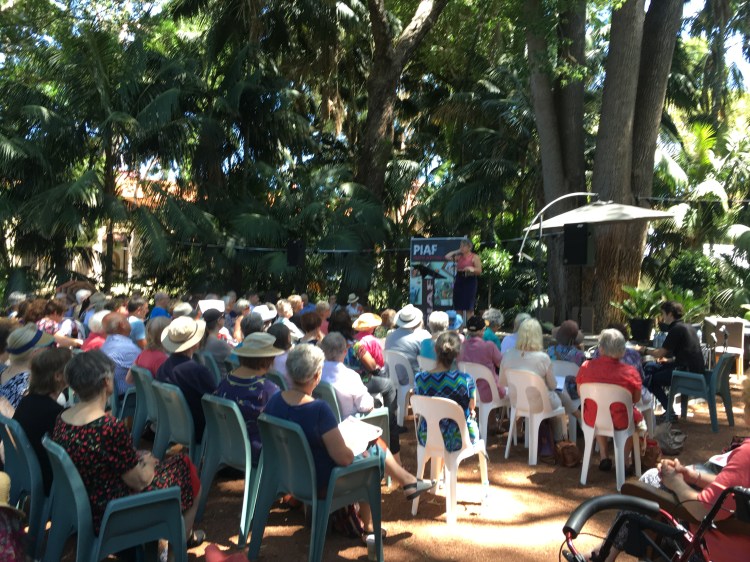
Start of Australian Poets Festival: 9x5 The Big Read WA Poetry
Standing room only

I went to sessions that were packed. There was standing room only for some.

I caught some spoken word sessions that made my heart sing. I’ve heard about Barefaced Stories, so that session on the Friday night was always on my horizon. Sketch the Rhyme – freestyle rap meets Pictionary … What’s not to love?

Joy and effervescence

Amongst it all, I have made progress with my thesis.

I have clarified what I think needs to change with the shape and direction.

Reshaping the project continues to be confronting. That’s obviously the point. If I didn’t need to respond and make changes, I think pursuing the topic would be an empty activity. The changes come from making discoveries and deepening understandings.

It comes down to the words and, to be honest, the chase. Hunting down ideas is part of the game. It’s what I love about the process.

Along the way, I’m hoping to be more balanced and remember that joy in being a reader and a writer. It is being a reader and a writer that brought me to the project. I am staying alert to moments that fizz because ideas work and words are right.

I’m hoping for some of those moments while I’m drafting the next chapter and making ongoing revisions.

A moderate haul from the bookshop at the Perth Writers Festival 2016
In the wings


*I suspect I only felt its heat, not an actual burn. There was probably no real need for consolation…

Looking into the well – seeing what is impacting on my writing

It has been quite a week. Lots of reflecting and prioritising as I sort through what is important now and how that relates to my longer-term goals.

Progress on my thesis is slow. I’m still working out how to best present my intended direction in the introduction and I’ve been working on some philological material. The good thing is that I’ve come across some really useful material in the last couple of days. My other writing … has been even slower. Despite that, I’ve come out of the week inspired and, I hope, refreshed.

Festival time

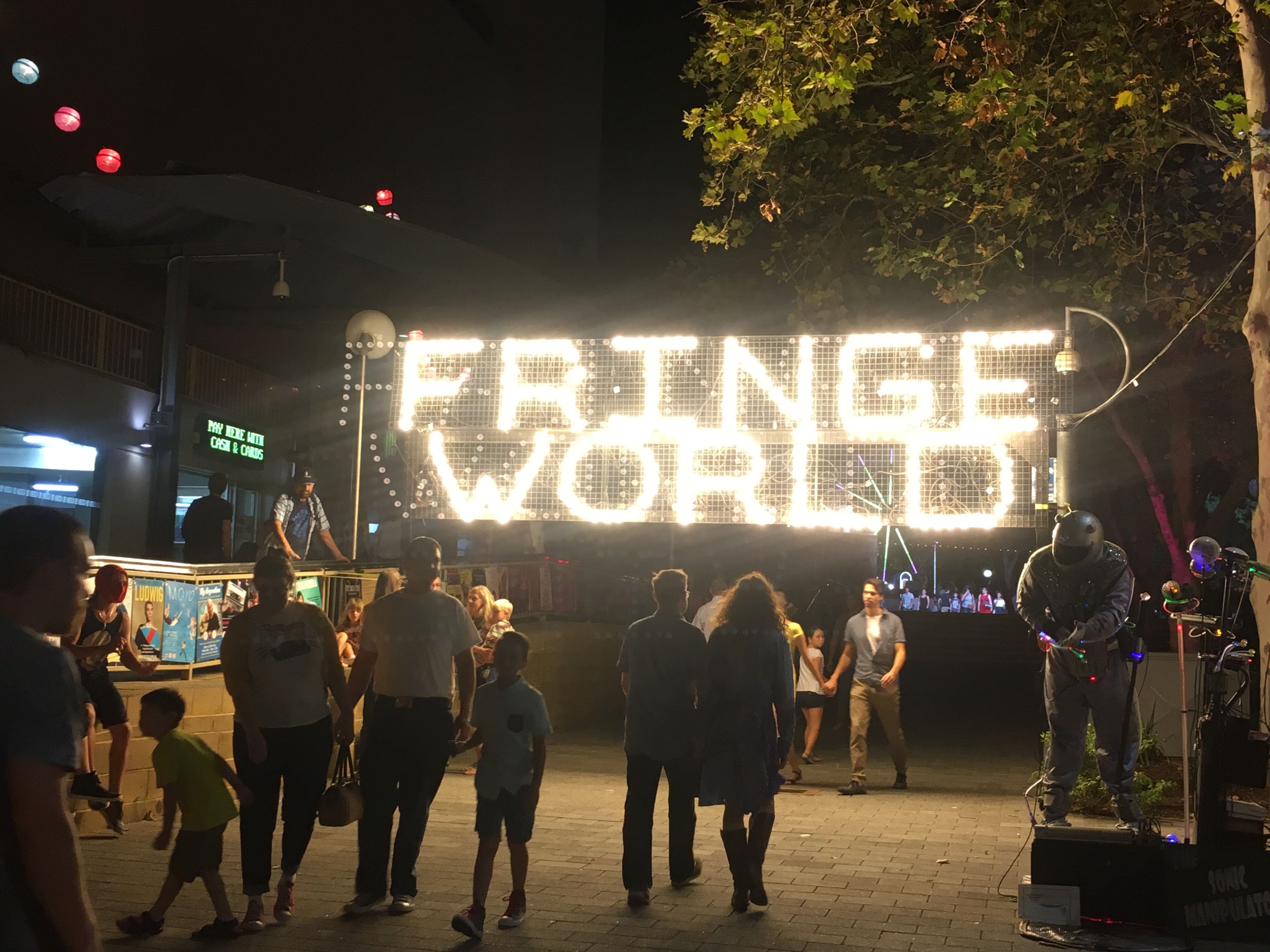
February and March in Perth are – if you’re me – pretty much perfect. First there’s Fringe World and then there’s PIAF – the Perth International Arts Festival. There’s so much to love.

Fringe World gateway in Northbridge
Gateway
The entrance to the Chevron Festival Gardens
Entrance

For the past couple of weeks I’ve been filling that well again, nourishing my the ‘arts’ part of me. And the best way to do that is, like it or not, to dive in.It isn’t without its challenges – questions about life paths and choices, anyone? – but it is fabulous. I’m blessed.

Despite there being all sorts of temptations, I’ve been restrained. The Fringe acts I’ve caught (over a two week period) are The Epic (Finn O’Branagain and Scott Sandwich), This Boy’s In Love (Adriano Cappelletta) and The Kransky Sisters. As far as PIAF goes, it’s early days. Tonight I enjoyed a mellow evening featuring William Fitzsimmons. I haven’t decided what is next. It will come down to how much progress I’ve made and how efficient I’ve been in making that progress. At the end of the day … now that I’ve had a modest helping the rest needs to be become a treat.

Except for the writers festival which is next weekend. I’m going to have to put that down to a necessity and work out how to be productive in and around the program. I have no idea which sessions I’m going to make it to. Previous experience would suggest that I should pace myself and not gorge on fully packed timetable. Should. Then again, I don’t want to be a wreck when Sunday afternoon comes around.

Material history

Another ‘diversion’ that I think will be helpful was a symposium I attended at the Western Australian Museum. The WAM’s current exhibition is A History of the World in 100 Objects. There are quite a few events scheduled in connection with the exhibition. Yesterday’s theme was ‘Unwritten Stories: Objects, Power and Shared Histories’. There was a half-hour walk through before the presentations that focused on the structure of the exhibition and highlighted some connections. I’ll be needing to go back a few more times. There’s plenty to think about. I’d like to do some of that thinking while looking at particular pieces.*

The symposium reminded me to stop and think about the problems I’m dealing with regarding textual evidence for my own work. The ‘dress’ element of my thesis is, in part, to anchor the topic to something concrete, so I can play with the idea of the material as well as abstractions. The usefulness of material/object history is something I’ve included already but there needs to be more of it in the work.

The bonus of the symposium, in addition to sharing a fascinating day with a good friend, is that it triggered some ideas for creative work. It is too soon for details – and it might turn into a nothing – but I love it when ‘study’ and ‘creativity’ come together. The symbiosis is part of the magic of my world.

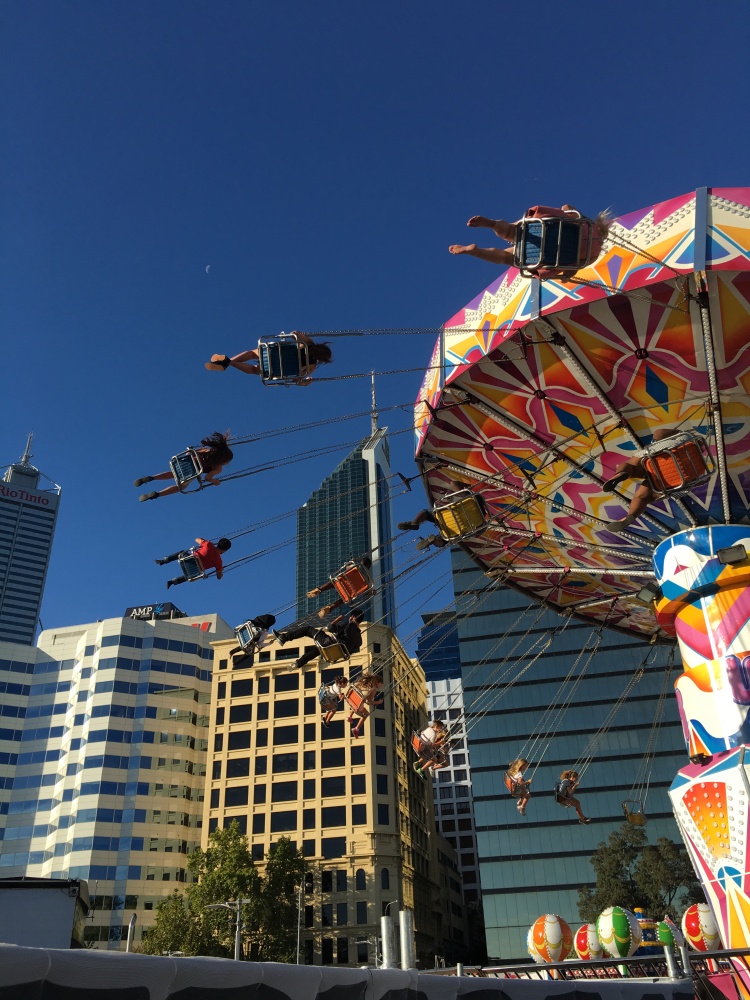
A swing and a roundabout in one
In the air

On a (not so) slightly political note

In a packed with much to think about – I’ve barely touched the surface – there was something else …

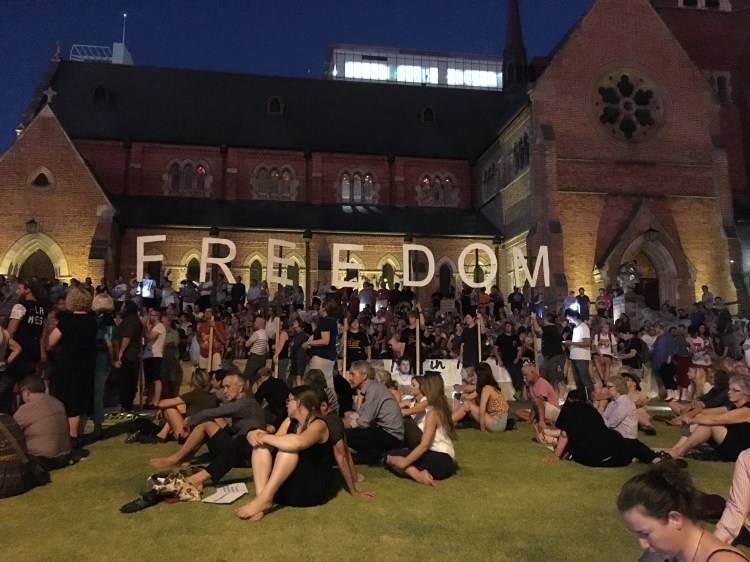
I took time out to attend a protest against children being sent to offshore detention. When I first wrote the About Me page for this blog I indicated I planned to cover topics from the Middle Ages to modern Australia. As it turns out, I’ve shied away from making comments on current events in general, and political matters in particular. A while ago I edited the About Me page so modern Australia no longer ‘features.

I spend a lot of my time, reflecting on those who are silenced in history, questioning the nature and experience of agency in relation to medieval women. I also spend time writing poems about trees and the objects that frame my life. That said, I know there are more important things. There are people who need other people to raise their voices. So, in among my gadding about ‘getting culture’ and digging through research about people long since gone and all the other things that have filled my days in recent weeks, I’ve been engaging in some (I have to admit, pretty low key) activism and I feel I should own that here.

To be clear: I do not think children should be kept in detention. I do not support the detention of asylum seekers. I am opposed to offshore processing. I am dismayed that Australia’s human rights standing at the moment is so parlous. I hold both sides of politics in Australia responsible for the current state of affairs. I believe Australia is better than this.

My longer-term goals – whether pursuing further study and research, building (and perhaps shifting) my career, rolling my sleeves up to play around with creative projects – are hollow, they matter little, if I do not hold true to what I value.

FREEDOM spelt out
Let Them Stay


*Brace yourselves for musings about emptied coffins, childhood memories of Sutcliff’s The Eagle of the Ninth and thoughts about ephemera.

Paper trails, paper trials – a meditation on why notebooks are important

Summer has been an on-again, off-again affair so far and now Perth is at the start of a heatwave. In these past couple of days, I feel I’ve been crisping and melting by turns.

The blessing of hot days in Perth is the sea breeze that tends to arrive in the afternoon. The heat doesn’t always seep away with nightfall, but days often end with some relief. On Friday evening there was time with family by the river with the bonus of dolphins. This morning I planted myself in front of a fan while I sorted papers and the general clutter of desks.

Colours and patterns

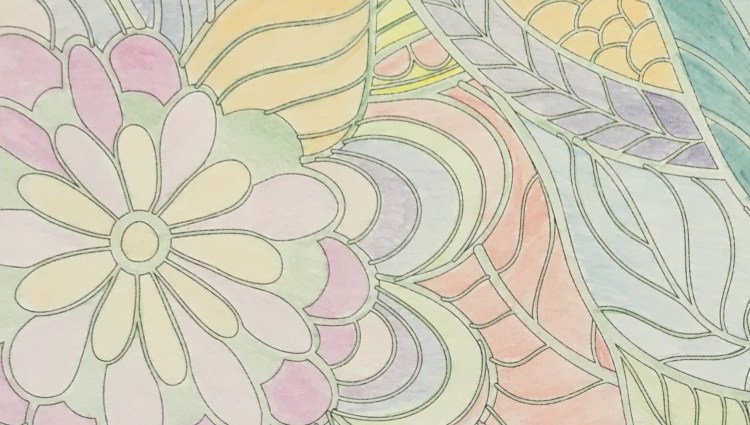
While I was sticking close to the fan I took some time out to do some colouring in. This might seem like a small thing. Kids colour in. How hard can it be?

heatwave colouring
Cool mindfulness

The current craze with adult colouring in promotes the potential for colouring in to promote mindfulness, to be meditative. I have a chequered history with colouring in. I’m not sure how relaxing it is.

I remember being in Year 1 and the first line of most pages being given over to making patterns. I wanted my workbooks to be beautiful, my patterns to be perfect. Spiral after spiral, mountains and arrows, patterns that repeated and were expected to be even before being coloured in after the work was done. The teacher in me understands the point of hand-eye coordination and spatial awareness. The residual five-year-old me remembers stress.

In Year 2 there was some sort of an issue with my handwriting. The solution? The teacher recommended colouring in. My mum got hold of a roll of pages for a colouring book. The same set of images, repeated. I can still see the mushroom house I dutifully coloured … and coloured and coloured. In the end I walked away with quite nice handwriting. Looking at my recent efforts with coloured pencils, I see I need to work on pressure and control.

I’m finding colouring in has its stresses. I’m working on breathing through the scrappy bits and where I’ve misunderstood the patterns. With summer raging outside, I’m trying to use colouring in to engage with the same sort of processing that can happen on a walk when my thinking has become stuck. Colouring in is cooler than a walk but I don’t think it is as ‘cleansing’.

Paper nests

Part of my reason for anchoring myself to the paperwork at home this morning is my search for a scrap of paper. Not really a scrap. It is a double page from an exercise book I had folded to be quite small. You can fold a sheet of paper seven times? I think I went with six.

Six, seven. Whatever. The page is now quite small and, now, lost. I suspect forever.

Pieces of paper come and go. I try not to be wasteful but I admit I sometimes quietly apologise to trees; there are days when I think it is probably best not to sit under one. I was thinking about this as I worked through what could be recycled, what could be composted and what needed to be filed.

All the while, I was looking for my scrap. Why? I gave myself an hour for poetry on the recent public holiday I sketched out seven (and a half) poems, four of which made it into my computer. I know there were seven (and a half) because I made a note on Facebook. The poems are on the scrap of paper. They’re nowhere near finished but I was happy with them as a start.

I took a photo of the front of the page. I had used a mechanical pencil with a fine lead and enjoyed shaping the letters on the page. The poems sat in boxed off blocks and snaked around the page when I ran out of space. The image was too sharp. I didn’t want anyone to read the poems in their rough form if I posted the photo so I deleted it and took another with a deliberate blur. This was, obviously, a foolish move.* I can make out most of what is on the page but I’m struggling to remember what was on the back of the sheet. I know that what you can’t see always seems better than it was in reality. I have pieced together bits and pieces but I’ve missed something. It might come back to me.

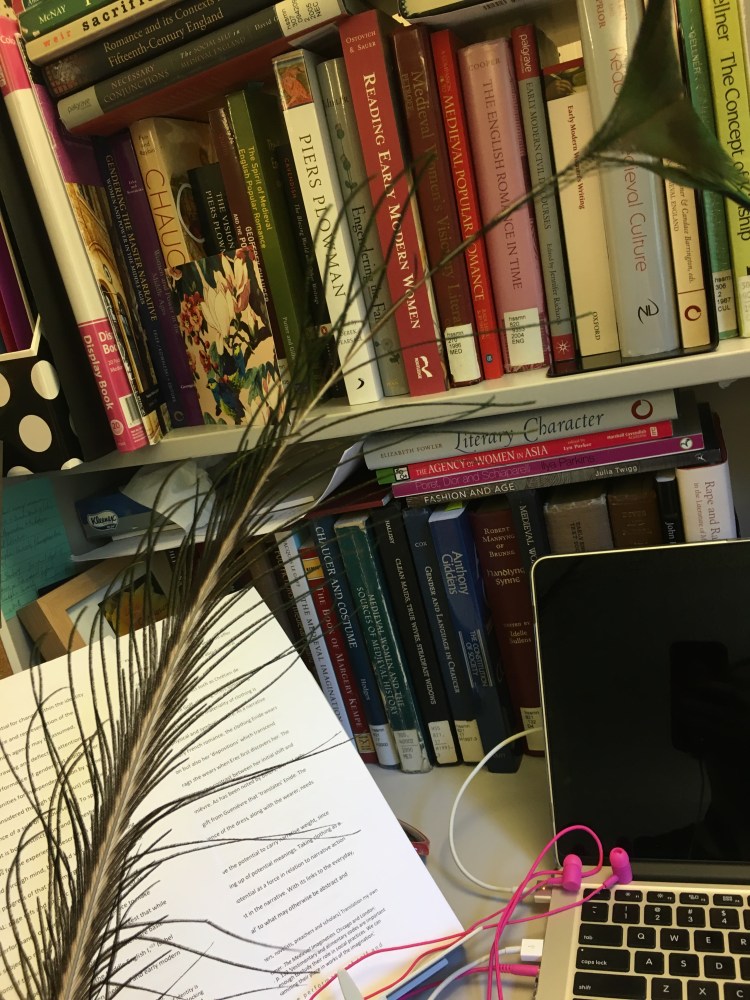
It’s the same with writing for uni. I keep everything in notebooks and in my computer. I love sticky notes because they tend to be hard to lose. I avoid loose pages, but it can be tempting to grab a clean sheet and start writing. I spend my days surrounded by paper. The pages pile up. I think of them as a nest for ideas. Page after page in a type of feathering the nest with multiple versions of drafts as I work out what I really want to say about my topic … and when to say it.

Peacock tail feather resting in front of desk
A writing nest

I share my uni desk with another part-time student.  I suspect the scrap would have been safe if I’d left it on that desk.

*It was also unnecessary. I didn’t end up posting the photo.

Poetry in film – January – Bright Star

As far as tangents go, I’m liking this poetry-in-film ‘project’. It offers time out but also structure. The fun part is that I can share the films with friends and family, but not necessarily the poetry. This is an important point since not everyone in my world is a fan of poetry. Here is potential for a spot of poetry by stealth.

Stealth poetry. It could be my new thing.

I can’t say that I’ve made a great deal of progress exploring Keats as a poet. I don’t often work with strongly rhyming forms and I can find them a challenge to read.* Yes, I know. This is odd given many of the texts I’m working with for my research … That said, I’ve dipped into the new volume I picked up at my fave secondhand bookstore and I’ve cruised around some websites.

With this being as far as I’ve gotten, my position in relation to Keats is going to have to remain as peripheral for now. What follows is, therefore, a general reaction rather than a considered comment.

A toe in the water

In my reading around the place I came across some observations about Keats being an uneven poet and from my toe-in-the-water effort I can see how this would be true. There are poems that just don’t work for me (‘A Song About Myself’ comes to mind even though I can see that there is a progression in there which I might enjoy looking at at a later point) but others are beautiful. I enjoyed the repetitions in ‘A Prophecy: To George Keats in America’. ‘On First Looking Into Chapman’s Homer’ is a favourite, as is ‘Ode to Autumn’.

I remember attending a talk on ‘On First Looking Into Chapman’s Homer’ and feel I should hunt out my notes from that day. Unfortunately, hunt in this case is not a euphemism. I can’t remember ‘when, where or who’ at the moment so I’m stumped as to where to go in search of the notes. I do remember that my curiosity was piqued and I spent some time looking at the poem and Chapman’s Homer for a bit.

(And now, as I write that, I remember what it was that was happening around that time. There was chaos. At least I know which set of notebooks to go to …)

I think the poem that I am most likely to keep coming back to is ‘Ode to Autumn’. As far as an anchor for working through the body of work goes, I don’t think this is a bad choice. I have wondered (idly) whether I might like to write out a copy of the poem to have on a board near my writing space.

Then I think of the state of my writing space and … I turn my attention to other things.

Hello, domestic avoidance.

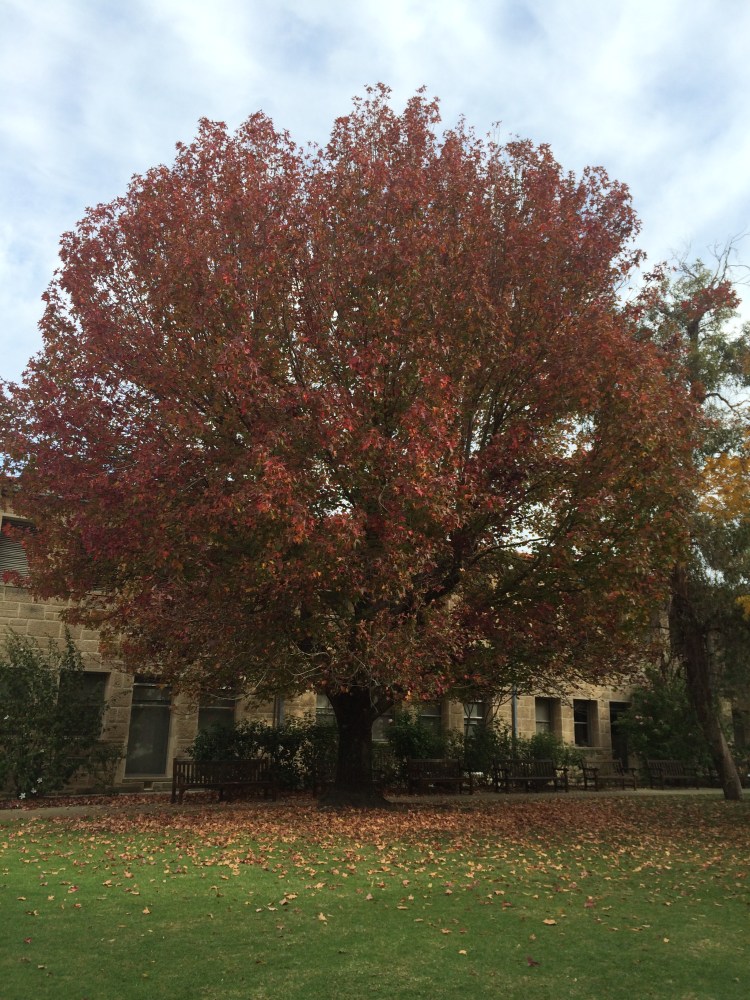
A tree in the Patricia Crawford Court last autumn
One of my autumn memories

Back to the film

Of course, what has brought me to this point is Jan Campion’s film Bright Star. The film is visually lush and I love it. Obviously, there is a fair bit of embroidering on the details of Keats’ life in order to construct a story for a ‘mass’ audience. I don’t mind a bit of embroidery in a film. It isn’t as though I was watching it for a true representation of Keats’ life. If I want ‘the truth’ I’ll find a biography or engage with primary source material. What I found particularly satisfying is that, in a stroke of serendipity, the film has been useful not just because of the pleasure factor of beetling about the place thinking of poetry but also because of one of the narrative’s strands: Fanny Braun’s obsession with (perhaps that should be reliance on) fashion.

My research topic is focused on late-medieval English texts and the connections between clothing and women’s personal agency. I’m starting to build up a little list of films that have statements about clothing/fashion which have nothing really to do with my topic but are interesting in terms of how personal agency is connected to dress. The most obvious of these is The Devil Wears Prada (David Frankel, 2006) but there are some others that I am sure are going to come up at some point.*

In Bright Star, Fanny talks about the connection between originality, or singularity, of dress and how that connects with personality. It comes down to the idea of the making and marking of an individual. In addition, Fanny’s skills in design and tailoring are presented as useful. Clothing, for Fanny, is not the frivolous whim that is dismissed by the character of Charles Brown. Rather, it a statement of self and a practical means of survival. She might make money from her creations but Brown (and Keats) is unlikely to.

Fiction it may be but, as a reflection point, this has been incredibly useful in the past few weeks in terms of considering how modern audiences and readerships make meaning of medieval and early modern texts. I’ve been thinking about the relevance of production and reception contexts – in general terms of theory but also as part of what the forces are that are shaping my own readings and the direction of my research.

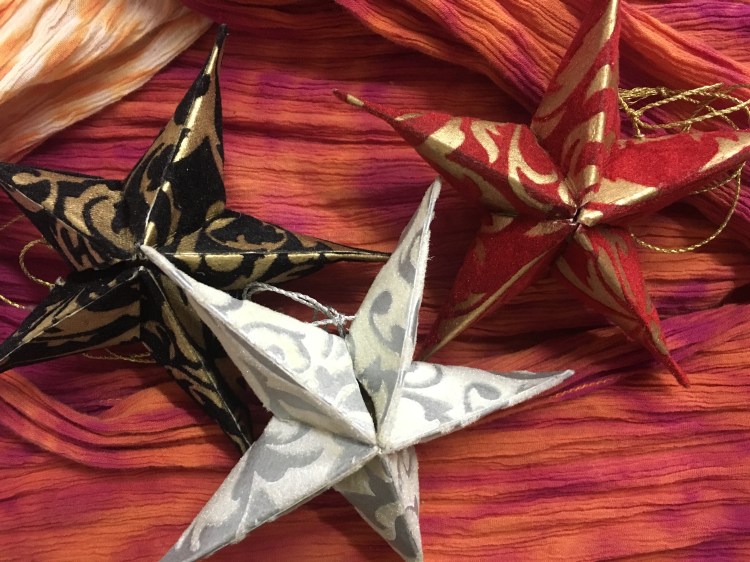
Three scented stars intended as pomanders in place of the picture of the night sky was planning on using but couldn't because, really, where is Perth's summer?
Stand-in stars

*I mention this dot-to-dot connection between recreation and research now mainly as a warning to those in my life who may find themselves participating in research-by-stealth activities when they really think they are just ‘catching a flick’.


Between the lines – taking a break to be able to read and write more

This has been a better week. Taking some time out last week was well worth it. I’ll admit to still being tired but not like I was last week. I was, to be frank, wiped out by the time the weekend came around.

This week has been slow but I’ve been more productive. I had a particularly good night of revising the draft of my introduction on Thursday. For a while in the mid to late afternoon I was worried I might not settle to the page and then, in a rush, I did. It was great.

I must get back to that page soon because there is still a (frightening) lot of work to do. However, in the spirit of recognising that I’ve been pushing too hard for too long, I took Friday night off to catch up with a friend and take in a movie.

We saw The Brand New Testament (Jaco Van Dormael, 2015) at Somerville. I enjoyed the movie. It featured a misanthropic God, his downtrodden wife and his daughter who dreams of a kinder world. It was irreverent, surreal and thoroughly enjoyable.

Somerville and tea

I suspect that I’ve mentioned the Somerville before. If you don’t know Perth (and as I’ve found out recently, even if you do) you might not have heard of the Somerville. It is an outdoor cinema at UWA. The Perth International Arts Festival presents a season of films there (and at the Pines at ECU) every summer.

Going to the Somerville is always lovely. Even on the nights when the films are not particularly to my taste.*

An outside movie on a balmy summer evening in the company of good friends goes a long way towards giving me joy. On evenings when I choose to go alone, I find it is a great place for reflection, getting some notes on the page and then having some time out. Because I know the time out is definitely coming I end up staying on-task pretty well.

The Somerville was packed, brimming with happy movie goers enjoying a picnic ahead of the screening. (And some who were not so happy because finding a seat – even on the grass – got to be a challenge.)

The resident kookaburras were also happy. The picnics made for a delightful smörgåsbord that they couldn’t resist. The murmur of hundreds of picnickers chatting over their dinners was punctuated by laughter and the occasional scream as morsels were snatched from forks. It seems that food being between plate and mouth makes for an easier target.

So long as you weren’t one of the ‘swooped’, the swooping made for some light entertainment. (I should note that this activity is not limited to the Somerville and the ‘burras make good use of the outside dining at other places on campus.)

Two kookaburras at the Somerville
Plotting the next heist
Kookaburra perched on lighting rig at Somerville
All he surveys

There has also been some pretty serious café writing with many pots of tea and the occasional LLB.

This weekend alone has featured Bread in Common, Natural Light Photography Gallery Café, Matilda Bay Tea Rooms (which may have changed name…) and Little Way. There was Tiamo as well as the UWA Club during the week … I don’t know what it is about writing in cafés but it really does work for me. A lot.

The promise of reading

Progress towards the revisions has meant that there wasn’t the reading that I had been doing last week. That aside, there was a moment when a colleague asked me about what I had been reading and I was excited to be able to reel of the titles of not one but two books-for-fun and have a quick chat in the tea room.

It had been too long since I’d been able to pull a couple of purely recreational titles out and talk about being a reader.

I also caught Spare Parts Puppet Theatre‘s version of Margaret Wild’s Miss Lily’s Fabulous Feather Boa. that gave me a chance to talk a picture books, reading AND puppets with some of my favourite young people. All of which was joyous.

I’m not sure what I’m going to read this week. With the Perth Writers’ Festival – and its attendant flurry of book purchases – on the horizon I expect I should prioritise one of last year’s purchases that I haven’t quite made it to yet. Due to my appalling lack of control in such bookshopping situations, I have a fair selection from which to choose.

I’m deliberately scheduling some reading-for-fun as part of my conscious carving up of time. (It ties into one of those beautiful planning sheets I am so fond of.)

There is also some more Keats to read this week. I’ve been dipping in and out of his work since watching Bright Star. I haven’t quite fallen in love with him yet. Perhaps that will come. I’ll let you know next time we meet.

There is also a book about sorting through clutter. For now, I’m going to head to my (blissfully air-conditioned) desk at uni and the delights of connecting Derrida and Foucault, et al with medieval fashion and gender studies. I am loving this part of the work but I need to get it done and move on soon.

OWC Poetical Works of John Keats and Banish Clutter Forever by Sheila Chandra
On my list for this week

*I found Zentropa (Lars von Trier, 1991) harrowing, for example, but it was still a great night. A Mongolian Tale (Fei Xie, 1996) and Departures (Yôjirô Takita, 2008) are among my all time favourites.


Letting go – giving in to the pleasure of reading

It is Sunday afternoon and on the way to my desk at Uni I succumbed to the temptations of the delights of a pot of tea (or two) and a seat outdoors at Little Way, an eatery near campus that opened a week ago.

It felt good to be outside in the fresh air. I fluffed about with some work but not much. The tea really was very good and I enjoyed the crumbed squid I opted for.

On reflection, tea and squid doesn’t make a lot of sense as a combination and I will be more thoughtful with my ordering next time but each was lovely in their own way.

Mostly, I was excited by the coolness of the fresh air.

Newly opened eatery Little Way, on Broadway in Nedlands
Fresh and inviting


A cool change

I seem to be inside all the time of late. This is partly because Perth has been so hot and the air outside has been like warm soup but also because I’ve either been at either my day job office or at Uni. To be outside with a cool breeze against my face was delicious. To switch off, frankly, joyous.

I don’t often goof off on a weekend afternoon. Even over the Christmas – New Year period, I kept the work going as much as I could. I’ve studied part-time while working full-time for most of my working life and, as a result, my weekends have been ‘golden’ for years. If I haven’t been studying I’ve been writing.

Catching up with friends and family punctuates the routine.

Knowing how I ‘should’ be spending my weekend time and not doing so tends to leave me uneasy. Last week, though, I’ve realised I’m at peak capacity and I felt I needed to step back a little. The year is just a couple of weeks old and I’m thinking of a holiday; just a week away, somewhere quiet, somewhere without a library.

I tend to measure a good holiday by the quality of the libraries I spend time working in. The idea of a library-free holiday feels unusual. I’ve also been weighing up the idea of making the week technology free. I don’t know how that will go. Surely it couldn’t be as hard as it feels it would be? I

’m also not sure how I’ll put together a week away. I suspect it will come down to a compromise. A week off with just a couple of days away may do the trick?

While this will go down as one of my most ‘unproductive’ weeks on record, I have made some inroads. While reflecting on my thesis topic, I’ve made links between a range of unexpected sources and influences that will be useful for further exploration. This is more exciting than I can explain, other than to say it is always heartening (yet also, on some levels, disappointing) to identify connections between the world today and what I’m looking at in the fourteenth and fifteenth centuries.

My next step is to confirm how to make them work. They aren’t ready for public consumption but I’m looking forward to developing my explanations of the connections. That my awareness of these connections has emerged through serendipity is a bonus. What seems to be serendipitous may, of course, just be that I left my mind free for some processing space.

Using poetic forms as a means to make notes and work with ideas continues to be helpful. I haven’t ‘finished’ anything but I have jottings that are promising. At the very least, they are useful as notes and starting points for the next piece of work. I’m still in that space where any words on the page are exciting; that those words might take on a pleasing shape gives me joy.

The calm of reading

I love reading but I lately I haven’t been reading fiction for pleasure. With so much else to be doing I just let it slide. This weekend I’ve indulged in some pleasure reading. I (finally) finished A Perfectly Good Man by Patrick Gale and I’ve nearly finished Careless by Deborah Robertson.

I enjoyed the Gale and can’t explain why it took me so long to read it. The practical reason is possibly that I put it down for a minute and it got buried under papers for a bit, languishing until I uncovered it. I had been meaning to read Careless for ages. This morning seemed like the perfect time to crack into it. I’m expecting to finish it tonight.

The thing that has pleased me about this weekend’s reading is that I’d (somehow) forgotten how different reading for pleasure is from reading for information. It is wonderful to remember that reading can be calming. I love what I’ve been reading for Uni but, for the most part, it hasn’t been relaxing of late. This weekend I have revelled in immersing myself in stories and how refreshing that can be.

As the weekend comes to a close I am still tired. The dream of a modest holiday lingers as a necessary goal but I have to admit that I’m feeling more relaxed. I let go of the routine and, while I may later be tempted to rue the day that I did, it is delightful to feel this relaxed.

Lilies in the moat at the Reid
Memory of calm