A long weekend – a golden time for all things ‘bookish’
As a republican – of the Australian let’s-cut-those-antiquated-ties variety, not the American political party type – I realise my excitement about a long weekend for the Queen’s birthday is not quite right.
I can’t help it, though. Long weekends are like gold and I’ll take them where I can get them.
My idea of a well-spent long weekend is not about relaxing and kicking back. I cram long weekends with things-that-need-to-be-done. I (try to) to catch up with the things-I’ve-missed-doing.
I have plenty to be keeping me busy over the next three days.
There are the usual chores and regular appointments. I have some bits and pieces from work that I need to play around with. I’m catching up with a couple of friends for a screening of the RSC production of The Two Gentlemen of Verona.* I want to do some writing. I need to do some reading. I’d quite like to catch up on the exercises for Blogging 101 that I haven’t managed to do.
My priority for this long weekend, though, is to finish sorting my study. My ‘Authority to Enrol’ letter arrived this week. I can’t wait to get started.
Before I do, I need to be sorted.
My desks need to be clear. My filing needs to be done. My books need to be ready.
I need to make some space for library books because as soon as I have a new library card…there will be guests to accommodate.

The home library
I’ve spent the last few weekends pulling my library into a semblance of order. It’s a long way from where I need it to be, but it’s coming along. The real work will happen over the Christmas/New Year break. In the meantime, I’ve been sorting and shelving.
I’ve been thinking about a cull. Thinking. I must stress that. It’s just thinking so far. I can’t remember the last time I cleared space on shelves…
There are a two or three titles that I know I will never go back to. Never. I didn’t enjoy reading them and I wouldn’t suggest to my friends that they sit down with them, either. They should probably go. The only emotional attachment I have to them is negative.
Now that I think about it, they can leave the premises this afternoon.
There are also some books that are in an appalling condition. They should probably go. Probably. Some of them. Maybe.
I’m wondering whether others could reside in an archive quality, acid-free box for a bit.
Would that do them any good? Would it do them any harm? Should I already have done this?
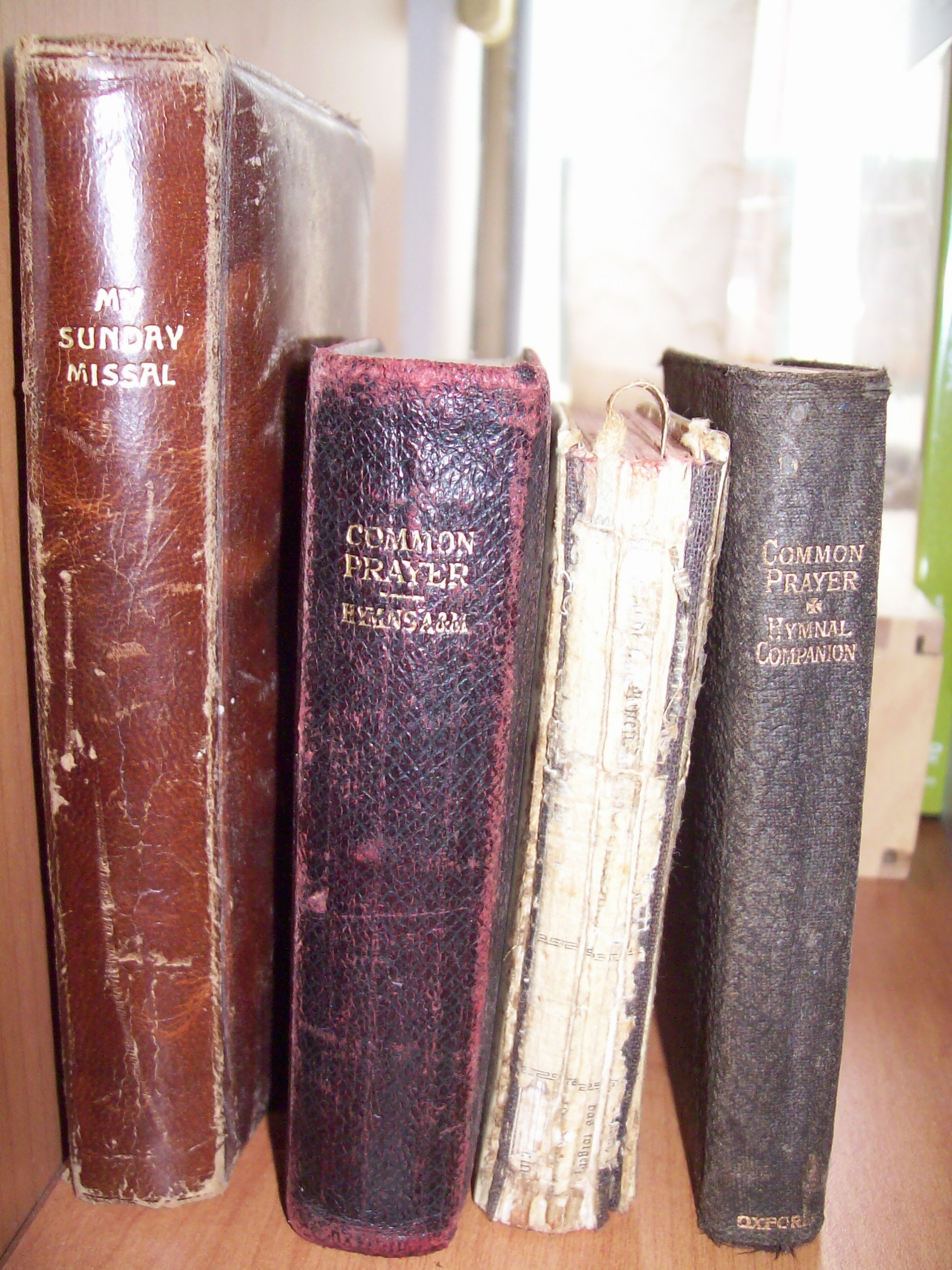
The books I’m thinking most concerned about are my grandparents’ prayer books and missals. They are old and in poor condition. I have no plans to cull them. I just don’t know what to do with them. I use them sometimes when I’m writing. They are a link back to people and beliefs that I’ve lost. I treasure them but they are not looking well.
Even if I had them rebound, I think they’d need some better accommodation than I am currently offering them.
Let the games begin
Signing up for a PhD while working full-time is a tad daunting. It’s not an impossible task but it will be tricky.
I gather I have about six-eight years to get the work done. I’d like to think I can get it done perhaps a little ahead of time. If not, I’d like to be done within the six years.
I might be dreaming. I might not. We’ll just have to wait and see.
It would be an awesome 50th birthday present to myself if I’ve kept to my planned timeline.
I’ll need to maintain a pretty structured approach to my weeks. Weekends will need to be guarded jealously. Long weekends – especially when uni is open – must be utilised.
I’ve said it before, long weekends are golden.
Family, friends and fun…all need to be in the mix as well.
I’m excited about my topic. For now – because I know it might need to be tweaked as I get into the research – I’m working with the title Representations of late medieval and early modern English women’s agency.
Here is my overview.
This project will explore the forms of agency available to women through examination of historical and literary representations in vernacular texts from the late medieval and early modern period in England. For the purposes of this project, agency will be taken to be the capacity of an individual to act of their own volition. Women’s actions and responses will be examined to investigate the proposition that agency is available within specific ways and contexts; that historical and literary texts test social structures. A particular focus will be the experience, description and expression of agency in the context of emotional communities – where the domestic as well as the civic is politicised and emotionally discursive.
While women in positions of privilege are likely to offer the greater amount of direct textual material, examples representing women in less privileged positions will be sought. In particular, textual representations of opportunities for women to actively respond to situations, engage in negotiations and decision-making processes, and determine access to their bodies will be explored. It is in these activities that the forms of agency available are directed by context.
Texts about, for and by women will allow for the consideration of a broad evidence base. The late medieval component will use texts ranging from romance and lyrics to legends of women saints and accounts of pilgrims, letters, wills and testaments, and sermons and treatises. Consideration of the early modern period will expand the project’s focus to include plays, poetry, creative prose and life writing.
There are some great texts and references that I came across during my Masters and I’ve found some more while doing the preliminary reading and developing the topic. I can’t wait to get started properly.
Would it be too keen to be at the enrolment office when they open on Monday morning?
*I’m never sure about films of stage productions but I’m looking forward to it in any case.
 joleemerrey